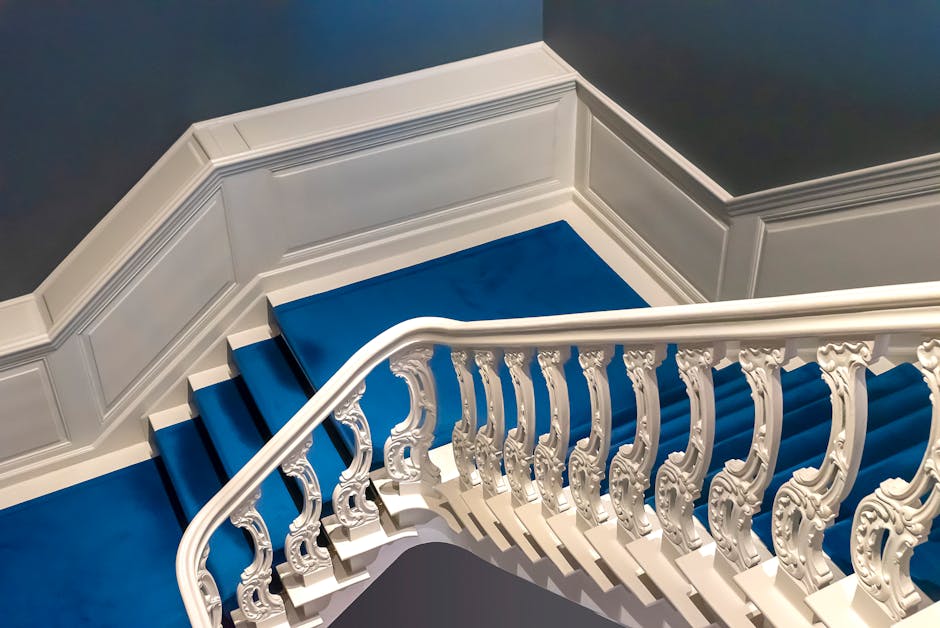
Pro Techniques for Navigating Narrow Staircases and Corners

Narrow staircases and tight corners can turn an otherwise ordinary move into a proper headache. One minute you are carrying a sofa that looked manageable in the lounge, and the next you are staring at a staircase that seems to have been designed by someone who hated furniture. The good news? With the right planning, lifting method, and route control, you can usually get bulky items through awkward spaces safely and without scratching the walls to bits.
This guide on Pro Techniques for Navigating Narrow Staircases and Corners breaks down the real-world methods professionals use, why they work, and how to avoid the classic mistakes that cause damage, delays, and strained backs. Whether you are moving house, clearing furniture, or planning an office relocation, the principles are the same: measure properly, prepare the item, control the angles, and never rush the turn.
To be fair, the challenge is rarely the furniture alone. It is the combination of weight, clearance, grip, lighting, and confidence. Get those right, and a tricky staircase becomes a manageable job rather than a disaster waiting to happen.
Table of Contents
- Why this matters
- How the technique works
- Key benefits and practical advantages
- Who this is for and when it makes sense
- Step-by-step guidance
- Expert tips for better results
- Common mistakes to avoid
- Tools, resources and recommendations
- Law, compliance, standards, or best practice
- Options, methods, or comparison table
- Case study or real-world example
- Practical checklist
- Conclusion
- Frequently asked questions
Why Pro Techniques for Navigating Narrow Staircases and Corners Matters
Narrow staircases are one of those moving-day problems that look minor until you are halfway through the job. The risks stack up fast: chipped paint, torn banisters, trapped furniture, scratched floors, and maybe a sore shoulder if someone has tried to force the issue. A bad turn on a landing can also create a domino effect, where the team loses balance and the whole item starts to drift in the wrong direction. That is where method matters more than muscle.
In professional removals, awkward access is treated as a planning issue, not a brute-force problem. The aim is to maintain control over the item at every stage of the move. You want just enough clearance to move smoothly, without twisting the load so aggressively that it becomes unstable. That sounds simple, but in a tight Victorian terrace or a compact stairwell, it takes judgement.
There is also a time-saving angle. A careful route plan often gets the item through faster than repeated failed attempts. In real life, the difference between a calm, measured approach and a rushed one can be 20 minutes or two hours. And yes, the second version usually involves someone saying, "Just one more lift," which is never as reassuring as it sounds.
If your move includes awkward access, it may help to compare support options such as man with van services, home moving support, or even broader house removalists if the staircases are only part of a bigger relocation. The right service choice can save a lot of hassle before the first box is lifted.
How Pro Techniques for Navigating Narrow Staircases and Corners Works
The core idea is straightforward: reduce the size of the object in motion, control its orientation, and make the route as predictable as possible. In practical terms, pro movers do three things well. First, they assess the item and the access route together. Second, they plan the turning path before the lift starts. Third, they keep communication tight so everyone moves in sync. Sounds basic. It is basic. But basic done properly is what saves the day.
The technique often relies on controlled tilting. For example, a sofa may need to be rotated vertically so its narrow edge passes the staircase corner first. A wardrobe may need to be carried on its side, then stood upright on the landing for the final turn. The same principle applies to beds, appliances, desks, and cabinets. You are not simply carrying an object from A to B; you are changing its shape in relation to the space.
Another important point is the centre of gravity. Heavier pieces feel manageable when the balance point is understood, but awkward when it is not. A mirrored chest of drawers, for instance, may look compact but behave unpredictably if one end is much denser than the other. That is why professionals often test the lift before committing to the stairwell. A short pause at the bottom can save a lot of drama halfway up.
It also helps to understand the difference between tight access and true obstruction. Some corners are difficult because of width. Others are hard because the turn radius is poor, the ceiling is low, or a handrail steals the extra inch you needed. Good technique adjusts for the specific limitation rather than treating every staircase the same. Let's face it, they are rarely the same.
Key Benefits and Practical Advantages
Using proper stair and corner navigation techniques gives you more than a neat-looking move. It reduces stress, protects the property, and makes the whole day feel more under control. That alone is worth a lot when you have people waiting, keys to hand over, or a loading bay booked for a narrow window.
- Less risk of damage: Walls, skirting boards, banisters, and furniture edges are all safer when the item is guided instead of dragged.
- Better safety for the team: A controlled lift lowers the chance of slips, strains, and awkward twisting.
- Faster decision-making: Knowing how to handle corners avoids repeated trial-and-error.
- More predictable outcomes: Once the route is mapped, everyone knows where to stand and when to pivot.
- Less emotional pressure: This may sound small, but a calm stair manoeuvre can stop the whole move from feeling chaotic.
There is another advantage people often overlook: better confidence. Once the crew sees that an item can be negotiated cleanly, the rest of the move tends to relax. That matters on busy days where energy starts high and then drops, usually just as the difficult item appears. Funny how that happens.
For larger jobs, using appropriately sized transport also helps. A well-matched vehicle from moving truck options or removal truck hire can reduce the number of trips and cut down on unnecessary handling. Less handling usually means less risk. Simple, but effective.
Who This Is For and When It Makes Sense
This is not just for professional movers. Homeowners, renters, landlords, office managers, and anyone clearing furniture from a tight property can benefit from learning these techniques. If your building has a narrow staircase, awkward landing, or corners that force a twist, you are in the right territory.
It makes particular sense if you are moving:
- large sofas or corner sofas
- beds and divan bases
- wardrobes, bookcases, and tall cabinets
- washing machines and fridges
- office desks, meeting tables, and IT units
- heavier furniture from period properties with tight access
It also matters if your move involves business premises. Office moves often combine tight staircases with time pressure, fragile equipment, and shared building access. In those cases, a planned approach matters even more. If you are managing a workplace relocation, it can be worth looking at office relocation services or broader commercial moves support rather than trying to force everything through manually on your own.
Truth be told, if the item is expensive, sentimental, or particularly awkward, this is exactly the kind of task where cautious planning pays off. Nobody wants the first dent in a new home to be made by the sofa on the stair landing.
Step-by-Step Guidance
Here is the practical method professionals use when working through tight staircases and corners.
- Measure the item properly. Record height, width, depth, and any protruding parts such as handles, feet, or armrests. If the item is soft furniture, measure at its widest rigid points, not just the cushion line.
- Measure the access route. Check stair width, landing depth, ceiling height, and the tightest turn. Do not forget radiators, wall lights, banisters, and door handles. That one little bracket can be the difference between a clean pass and a stuck load.
- Remove obstacles. Take away rugs, loose mats, ornaments, coat stands, and anything that could shift underfoot. Open doors fully and hold them back if needed.
- Protect surfaces. Use blankets, corner guards, floor protection, and tape only where appropriate. The aim is to reduce friction and prevent scuffs without creating extra trip hazards.
- Assign roles. One person leads, one supports, and one spots. That may sound over-organised for a simple lift, but in a tight stairwell it keeps everyone calmer.
- Test the orientation. Before committing, tilt the item and see how it behaves. Sometimes a vertical carry works better than a horizontal one. Sometimes the opposite. You will know quickly.
- Move in small, deliberate stages. Lift, pause, reset grip, then continue. Corners are usually handled in tiny adjustments, not one big heroic heave.
- Use verbal cues. Short instructions like "up," "hold," "turn," and "down" are better than long explanations mid-move. In a tight space, clarity beats eloquence every time.
- Re-check before the final turn. Many items clear the first half of the staircase but catch at the landing. That is the moment to slow down, not speed up.
- Finish with a clean set-down. Lower the item gently, recheck for damage, and only then release it. A rushed final drop can undo an otherwise perfect manoeuvre.
If the item proves too difficult at any stage, stop and re-evaluate. Backtracking is not failure. It is good judgement. Really.
Expert Tips for Better Results
Small adjustments often make the biggest difference. The pro techniques are not always dramatic; they are usually about tiny gains in clearance, balance, or control.
Use the landing as a reset point
On staircases with a landing, treat that space as a working zone. Set the item safely, change grip positions, and prepare for the next angle. Trying to force both turns in one movement is where many people come unstuck.
Work with the stair shape, not against it
Some staircases are easier if you move the item diagonally, then rotate it as you rise. Others are better if you keep it close to the wall on one side. There is no single magic method. The best technique is the one that matches the geometry in front of you.
Think about the item's weak points
Furniture corners, mirror panels, drawer runners, and appliance doors can all catch. Protect those points first. A blanket over the most exposed side can make all the difference, especially when moving through older properties where walls are not exactly forgiving.
Do a dry run with no load, if possible
Sometimes just walking the route with empty hands gives you a better feel for the turn. You notice the low ceiling, the awkward banister, the light switch that protrudes just a little too far. Those details matter more than people think.
Use better lighting than you think you need
Dim stairwells are a classic problem. Shadows make it harder to judge clearance. A bright torch or temporary light source can improve confidence and reduce missteps. Sounds trivial, but it really does help.
One small human aside: if the plan suddenly looks impossible, it usually means the item needs a different angle, not more force. People tend to forget that when the move is in full swing and everyone is a bit hot, a bit tired, and probably hungry.
Common Mistakes to Avoid
The biggest mistakes are rarely about strength. They are about impatience and poor setup.
- Skipping measurements: Guessing the fit is a gamble. Sometimes you win. Usually you do not.
- Forcing the first angle: If the item catches, do not keep pushing and hoping. Pause and re-orient.
- Ignoring banisters and wall edges: People focus on the staircase width and forget the things that reduce it.
- Poor communication: When one person lifts before another is ready, control disappears fast.
- Dragging instead of carrying: Dragging may feel easier at first, but it often increases damage and instability.
- Overloading one side: Uneven weight distribution can make a carefully planned move feel suddenly clumsy.
- Rushing the landing turn: This is the classic failure point. Slow it down.
And here is one more, slightly annoying mistake: assuming the smallest person should always be the one at the awkward end. Not necessarily. The right person for the role is the one who can control the load safely, not the one who looks least intimidating.
Tools, Resources and Recommendations
You do not need a van full of specialist equipment for every move, but a few well-chosen tools make tight access much easier.
| Tool or resource | What it helps with | Practical note |
|---|---|---|
| Moving blankets | Protecting furniture and walls | Best for larger items with hard edges |
| Furniture straps | Control and load sharing | Useful when two people need more stable grip positions |
| Corner protectors | Reducing scuffs on sharp turns | Especially helpful on painted walls and new plaster |
| Floor covering | Protecting stairs and landings | Helps when moving repeatedly through the same route |
| Basic measuring tape | Checking clearances | Probably the most underrated moving tool, to be honest |
| Gloves with grip | Handling and confidence | Choose ones that do not make you lose dexterity |
If you are hiring support, ask about packing help as well. Well-packed items are easier to tilt, grip, and protect. In many cases, packing and unpacking services reduce avoidable damage before the first stair is even climbed.
For customers comparing service levels, it can also help to look at man and van style support for smaller moves, or a larger vehicle through moving truck options if the staircase challenge is part of a bigger volume of items.
Law, Compliance, Standards, or Best Practice
Where moving work involves lifting, carrying, or transporting items in the UK, safety is not just common sense; it is part of good working practice. You do not need to become a rules expert overnight, but you should understand a few practical expectations.
First, heavy and awkward lifting should be assessed in advance. That means looking at the load, the route, the floor condition, and the people available to do the job safely. Second, equipment should be used sensibly and maintained properly. Third, if a property has shared access, you should avoid blocking escape routes or creating hazards for other residents or staff.
For businesses, that matters even more. Office environments often involve corridors, stairs, lifts, and multiple people on site at once. A clear moving plan, sensible timing, and proper communication all help keep disruption down. If you are planning a workplace relocation, it may be worth reviewing health and safety policy information alongside your moving plan. If security and liability are on your mind, insurance and safety guidance is also a sensible place to start.
Best practice is simple enough: do not force unsafe lifts, keep access routes clear, and stop if a load becomes unmanageable. That is the kind of judgement that protects people, property, and schedules. And yes, it is better to make a small delay than a costly repair.
Options, Methods, or Comparison Table
Different situations call for different handling methods. Here is a practical comparison of the most common approaches.
| Method | Best for | Pros | Limitations |
|---|---|---|---|
| Horizontal carry | Long items with clear stair width | Simple and familiar | Often fails on tight turns or low ceilings |
| Vertical carry | Sofas, cabinets, and narrow landings | Reduces width across the turn | Needs good balance and clear spotting |
| Diagonal rotation | Awkward corners and offset staircases | Can create extra clearance | More complex to coordinate |
| Partial disassembly | Large wardrobes, beds, and office furniture | Often the safest route through tight access | Takes time and may need tools |
| Professional relocation support | Heavy, valuable, or high-risk items | Reduces stress and handling errors | Requires planning and budget |
There is no prize for using the hardest method. The best move is the one that gets the item through safely. Sometimes that means taking a bed frame apart. Sometimes it means standing the sofa upright. Sometimes it means admitting the item is better handled by people who do this every week.
Case Study or Real-World Example
A typical example: a two-bedroom flat in a period building, narrow staircase, sharp right-angle turn on the first landing, and a large three-seater sofa that looked fine in the lounge but suddenly became a very different object once it reached the hallway.
The first instinct was to carry it normally. That failed immediately at the turn. So the team stopped, measured the landing again, and changed the plan. The sofa was rotated onto its narrow edge, one person took the lower support point, another controlled the top, and a third guided the armrest past the banister. The move still took concentration, but once the angle was right, it slipped through with only a few centimetres to spare.
The lesson was not that the sofa was impossible. It was that the original approach was wrong. After the sofa was through, the rest of the job felt easier because the team had a shared process. You could almost hear the collective exhale. That tiny pause after a successful turn is very real, by the way.
In similar jobs, customers often choose a service that matches the scale of the task. A smaller load may suit furniture pick-up, while a larger move may be better handled through home moves planning or a full relocation service. It depends on the volume, the access, and how much lifting you want to manage yourself.
Practical Checklist
Use this checklist before moving anything through a narrow staircase or corner.
- Measure the item at its widest rigid points
- Measure stair width, landing size, and ceiling height
- Check for bannisters, radiators, light fittings, and protrusions
- Clear the route of loose items and trip hazards
- Protect floors, walls, and furniture edges
- Choose the item orientation before lifting
- Assign a lead mover and clear communication words
- Test the turn with a controlled lift, not a rush
- Pause at landings and reset grip if needed
- Stop and reassess if the load becomes unstable
If you can tick all of those off, you are in good shape. If not, take another minute. Those minutes are usually cheaper than repairs.
Get a free quote today and see how much you can save.
Conclusion
Narrow staircases and corners do not have to derail a move. With measured planning, the right lifting orientation, and clear communication, even awkward access can be handled safely and calmly. The real skill is not muscle; it is control. Once you understand how to read the space, the move becomes a series of small decisions rather than one big gamble.
If there is one takeaway, it is this: never treat a tight turn as something to power through. Slow down, re-angle, protect the route, and make the item fit the space rather than fighting it. That is how experienced movers save time, protect property, and keep everyone on side.
And when the last awkward corner is finally behind you, the relief is oddly satisfying. A bit of sweat, a bit of patience, and suddenly the staircase that looked impossible is just part of the story.
Frequently Asked Questions
What is the best way to move furniture around a narrow staircase corner?
The best way is usually to measure first, choose the right orientation, and use controlled rotation at the landing. In many cases, standing the item on its narrow edge gives the extra clearance needed for the turn.
Should I take furniture apart before trying to move it upstairs?
If the item is large, heavy, or has removable sections, partial disassembly is often the safer option. It reduces bulk and makes the corners much easier to manage. Bed frames, wardrobes, and some desks are common examples.
How do professionals handle stairs that seem too narrow for a sofa?
They test the angle, adjust the carry position, and sometimes rotate the sofa vertically. If that still does not work, they may remove legs, shift the route, or change the handling plan entirely. A different approach is often the answer.
Is it safe to drag furniture up narrow stairs?
Usually not. Dragging increases the risk of damage to both the item and the staircase, and it can make balance harder to control. Carrying with support is generally safer than pulling.
What tools help most when navigating tight staircases?
Moving blankets, furniture straps, floor protection, corner guards, a measuring tape, and good grip gloves are all useful. None of them replace planning, but they do make the job cleaner and safer.
Why do corners cause more problems than straight stairs?
Corners force the item to change direction while still being lifted. That means the load, width, and balance all change at the same time. It is the turn itself, not the stair height, that often creates the real difficulty.
Can one person move heavy items through narrow stairs alone?
Sometimes small items can be managed solo, but heavy or awkward furniture is much safer with at least two people. A third person to spot the route can make a big difference in tight spaces.
What should I do if the furniture gets stuck halfway up the stairs?
Stop immediately and avoid forcing it. Lower the item safely if possible, then reassess the angle, grip, and route. A stuck load is usually a sign that the orientation needs to change.
Do I need professional help for awkward access moves?
If the item is valuable, oversized, fragile, or likely to damage the property, professional help is usually a wise choice. It can be especially helpful for home moves, office relocations, or any building with tight stair access.
How can I protect painted walls and banisters during a move?
Use blankets, padding, and corner protection where appropriate, and keep a spotter on the tightest side of the turn. Slow, deliberate movement is often the best protection of all.
What is the biggest mistake people make with narrow staircases?
Trying to force a bad angle. If the item does not fit in the first attempt, the answer is usually better positioning, not more strength. That one habit prevents a lot of damage and frustration.
How early should I plan for awkward access before moving day?
As early as possible. Ideally, assess the staircase and corners before the move is underway, so you can decide whether items need disassembly, extra protection, or a more suitable transport plan.